Sometimes the biggest breaks in our careers don’t come from talent or experience.
They come from bias.
I once landed a job in Dubai.
Not because of my skills.
Not because of my experience.
But…because of my boarding school.
The CHRO and I discovered we went to the same school in Ooty.
The interview?
Not about my track record or the role.
It was about school days, teachers, and shared nostalgia.
The bias?
“He’s like me.”
The result?
I got hired.
And fortunately, it worked out.
Thirteen years, strong results.
But here’s the uncomfortable truth:
Was it based on capability?
No.
Was it driven by bias?
One hundred percent.
Bias is still in the driver’s seat
Even in 2025, with AI tools, DEI initiatives, and structured interviews, Similar-to-Me Bias (Affinity Bias) still dominates hiring and promotion decisions.
It hides behind words like “culture fit,” “chemistry,” or “gut feel.”
Other culprits:
Confirmation Bias: We search for evidence to support what we already believe.
Halo Bias: One strength overshadows flaws.
Recency Bias: The last impression outweighs consistency.
The cost?
Missed competence. Shrinking diversity. Echo chambers.
Bottom Line
Bias may sometimes land you the right person.
But leadership is not about luck. It is about intention.
Have you seen bias tilt a decision?
Share your story below.
ecubetraining
“It’s Not a Motivation Problem — It’s a Visibility Problem: Why People Analytics Is the Missing Link in HR”
💬 “I don’t feel seen.”
💬 “I’m not understood.”
💬 “No one notices what I’m capable of.”
I’ve heard these words in dozens of coaching conversations with millennials and Gen Z professionals…
👉 And here’s the reality: It is not a motivation problem…It is a visibility problem.
But in many organisations, HR is still guessing:
Promotions often depend on perception, not performance.
Engagement surveys are collected but not decoded.
Training programs are launched without tracking ROI.
The solution?
People Analytics.
Data that helps us move from
Reflection → Action
🔹 Descriptive – What happened?
Engagement scores dropped 12% among mid-level managers in Q1.
🔹 Diagnostic – Why did it happen?
42% cited lack of career development; 31% felt disconnected from leadership.
🔹 Predictive – What could happen?
Projected attrition in this group is 18% over the next 6 months.
🔹 Prescriptive – What should we do?
Launching targeted mentoring programs could reduce attrition by 25%, based on previous campaign data.
✨ Numbers aren’t just statistics; they are signals.
Signals to see potential, act early, and build workplaces where people feel understood—not just managed.
🚀 It’s time to evolve from HR processes → People Intelligence.
Because when someone says, “I don’t feel seen,”
It’s our job as leaders to look closer—and act smarter.
👉 How is your organisation using data to move beyond perception?
From Spiderman to Spreadsheets: Why Strategic HR Must Connect Data toDecisions
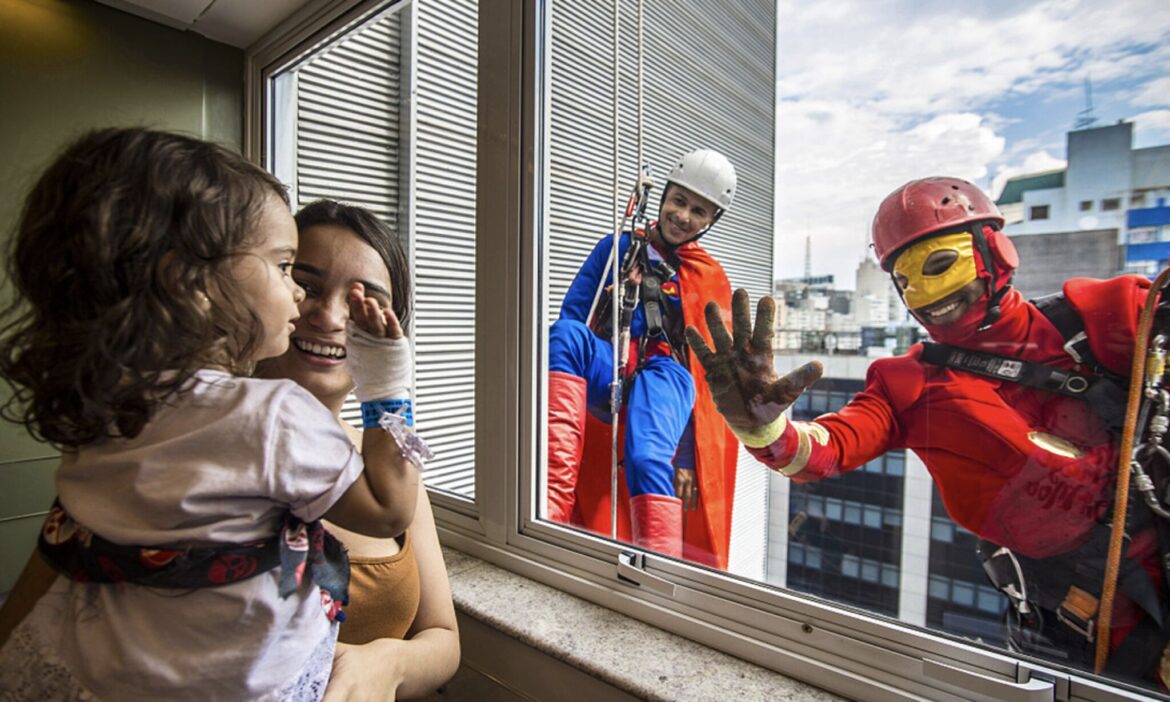
There is a story from a children’s hospital in the U.S. that speaks volumes. Doctors were concerned: children’s recovery was slow, and their emotional well-being was low.
The team asked a deeper question…not just about medicine, but about experience: “How can we make children feel better about being in the hospital?”
Then came a simple but brilliant idea.
The hospital dressed its window cleaners as superheroes
Spiderman,
Batman,
CaptainAmerica.
The kids lit up with joy.
They laughed, looked forward to the visits, and recovery rates improved measurably.
What changed?
A strategic, human decision was made, based on observed behaviour.
Not guesswork, but insight.
Today, HR leaders are navigating a similarly complex world:
Subjectivity in performance evaluations and promotions
Ambiguity about what truly drives engagement
Uncertainty in workforce planning and capability building
In such conditions, instinct alone isn’t enough.
HR must step into a new role…one of strategic influence.
And that means learning to ‘connect data to decisions’, especially when it comes to people.
Lately, I’ve been failing!
Not dramatically…but in quiet, personal ways: missed targets, stalled approvals, lost deals.
And every time, the inner critic pipes up: “Maybe you’re just not good enough.”
A recent one hit hard.
We worked closely with a client for weeks.
Meetings, revisions, full commitment.
Then…
Just like that…they chose someone else!
No explanation.
I was gutted!
But as the dust settled, a better question emerged…
What is this failure trying to teach me?
The answer
?
?
?
That I showed up. I tried. I cared.
And that matters more than the outcome.
Failure, I’ve realised, is feedback.
It’s proof I’m in motion. Not stuck. Not hiding behind comfort zones.
But evolving…boldly, consciously.
So I’ve stopped asking, “How successful am I?”
Now I ask, “How bravely did I fail today?”
Because failure means I’m doing work that matters.
And that, to me, is the real success!
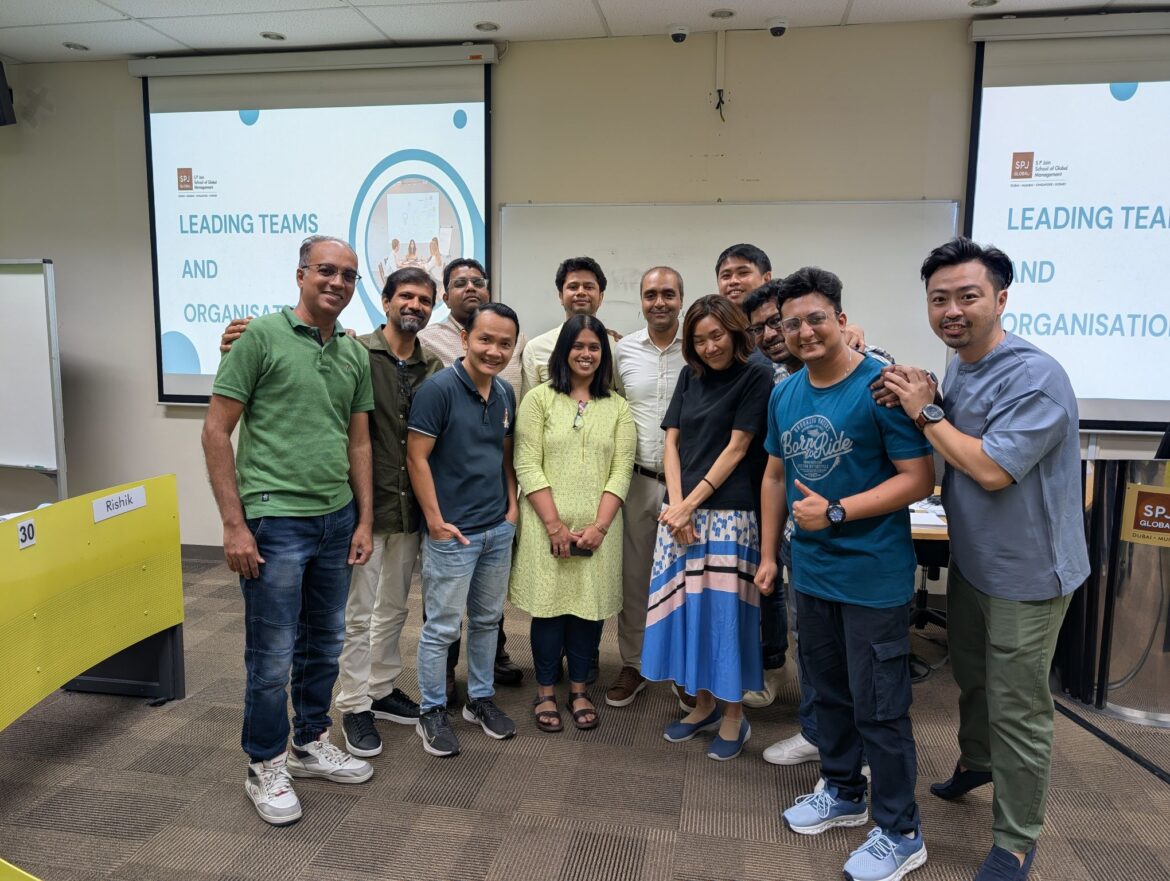
Just wrapped up an energising session in Singapore with a diverse group of leaders from across Asia—Singapore, China, Vietnam, India—on Leading Teams and Organisations.
We explored how facilitative leadership builds psychological safety, unlocking innovation, creativity, and even the freedom to fail without fear. Real empowerment, we discovered, comes with clear communication and thoughtful intention.
A highlight was the HBR Mt. Everest Simulation—a powerful exercise in balancing individual goals, team dynamics, and leadership strategy. It revealed the leader’s role in managing information, directing process, and motivating peak performance under pressure.
We also explored Belbin’s team roles, the various hats a leader wears, and how leadership style must adapt to its context.
Personally, I loved being in Singapore!
Deeply inspired by its discipline, cultural richness, and the professionalism of the people. So much to learn from, and so much to appreciate.
We often think of anger as a natural response; something inevitable when people don’t listen, when expectations are not met, or when situations feel unfair.
But
What if anger isn’t actually about the trigger at all?
What if it’s about the story we tell ourselves about that trigger?
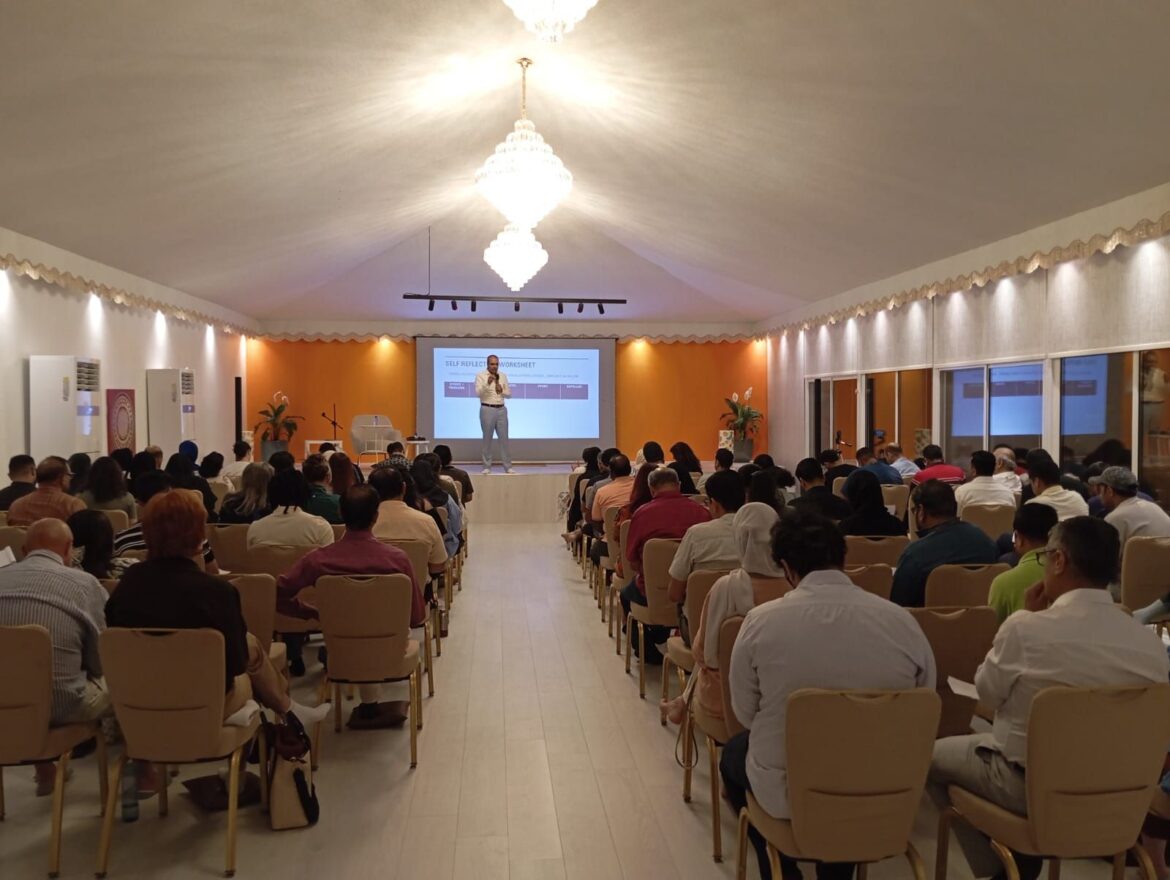
At a recent session I led at the Bahrain Meditation Centre titled “Overcoming_Anger: Taming the Inner Fire,” we explored this very question.
Over two days, we created a deeply reflective space where participants could examine the emotional and cognitive roots of anger, not just from a behavioural lens, but from a spiritual and psychological one.
💥 We began by acknowledging that there are real situations where anger may be justified
injustice,
abuse, or
danger.
But for most of us, everyday anger comes from far less serious events:
Someone cuts in line
A colleague doesn’t meet a deadline
A mobile phone rings in a silent theatre
The core insight?
Triggers don’t create anger. Interpretations do.
And interpretations come from our internal narrative.
We don’t get angry at facts.
We get angry at the meaning we assign to them.
🧠 Reframing the Story
Through shared reflection, we looked at how to:
Pause and step back from the heat of the moment
Strip away the story, and look at the facts
Reframe the trigger in a way that preserves our peace
Choose a response rather than react impulsively
This ability to shift perspective is a powerful tool for emotional mastery.
🎯 The Role of Communication
We also discovered how much anger stems from poor communication.
So often, people don’t act maliciously, they don’t understand what we mean. A few simple shifts – summarising expectations, confirming understanding, or asking clarifying questions – can prevent weeks of frustration.
Anger is often the smoke signal of unmet needs:
The need to be respected
The need to be heard
The need to feel valued
We explored how, instead of expecting others to meet those needs, we can begin to meet them ourselves through self-respect, self-appreciation, and self-validation.
🌿 Returning to Peace
The most powerful part of the session was reconnecting with the truth of who we are. Beneath the temporary storms of emotion, I am peace. Anger is not my identity; it’s a momentary cloud that obscures the sun.
Through guided meditations, moments of silence, and conscious pauses, participants experienced the peace that lives at their core. From that space, transformation becomes not just possible – it becomes natural.
The feedback was deeply moving.
People shared that they felt empowered, calm, and in control – not because anger was “managed,” but because it was understood, reframed, and ultimately transcended.
✨ Because when we reconnect with our inner peace, we don’t just tame the fire; we become the light.
At ECUBE Training and Consulting, one of our core beliefs is this:
True leadership development is not just about building capabilities, it’s about creating clarity.
And the most powerful pathway to clarity is coaching.
In every leadership program we deliver, we intentionally weave coaching into the journey, both individually and in groups.
Why?
Because, while workshops build knowledge and skills, coaching transforms awareness into action.
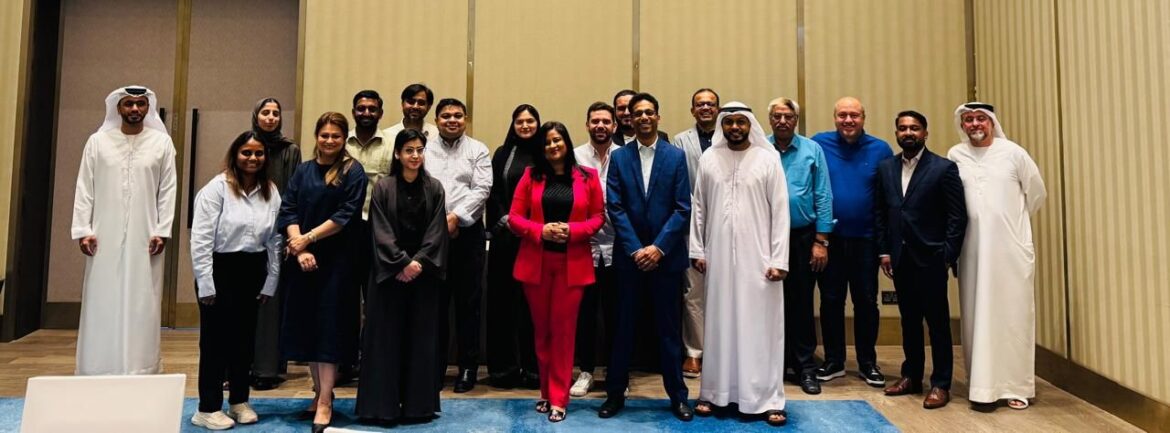
Recently, I facilitated a series of group coaching sessions for 25 senior executives at one of the hashtag#UAE’s largest and most dynamic real estate developers.
Many of them came in with years of experience and a wealth of training under their belt. But after just 90 minutes, the shift was palpable.
One of the leaders said, “It was all in my head, jumbled up. But now, everything’s so clear. I know what I want, how to get there, and I feel strong and capable of moving forward.”
That’s the magic of coaching!
Coaching isn’t about telling people what to do.
It is based on a fundamental truth: you already know what you want, and you already have the inner resources to achieve it.
The missing link is often the time, space, and support to unpack it.
Here’s what coaching unlocks for leaders:
✅ Clarity on what truly matters – not just professionally, but personally.
✅ Recognition of their strengths – and how to use them strategically.
✅ Vision and direction – what they want, where they’re going, and why.
✅ A real strategy – not vague ideas, but step-by-step action.
✅ Confidence and ownership – a deeper belief in their capability.
✅ Accountability and momentum – consistent progress, not just inspiration.
Too often, leaders get stuck in “problem mode.” Or they get caught in passive learning, consuming information but not applying it.
Coaching helps them break out of that loop. It’s the bridge between insight and implementation.
In our work at Ecube Training and Consulting, we’ve seen over and over again that when leaders are coached well, they move with clarity, confidence, and purpose.
And when that happens, everything changes…
Their teams,
Their performance
and
Their impact.
If you’re investing in leadership development, make coaching a core part of the journey. The results will speak for themselves.
Most of us wait for something big to feel good…
A promotion,
A thank-you from the boss,
A formal letter of appreciation…
But
Do we really need to?
Recently, I was on an overnight train journey from Ujjain to Bombay.
I love train rides!

They give me space to reflect, especially between my MBA lectures in Mumbai on leadership, negotiation, and change management.
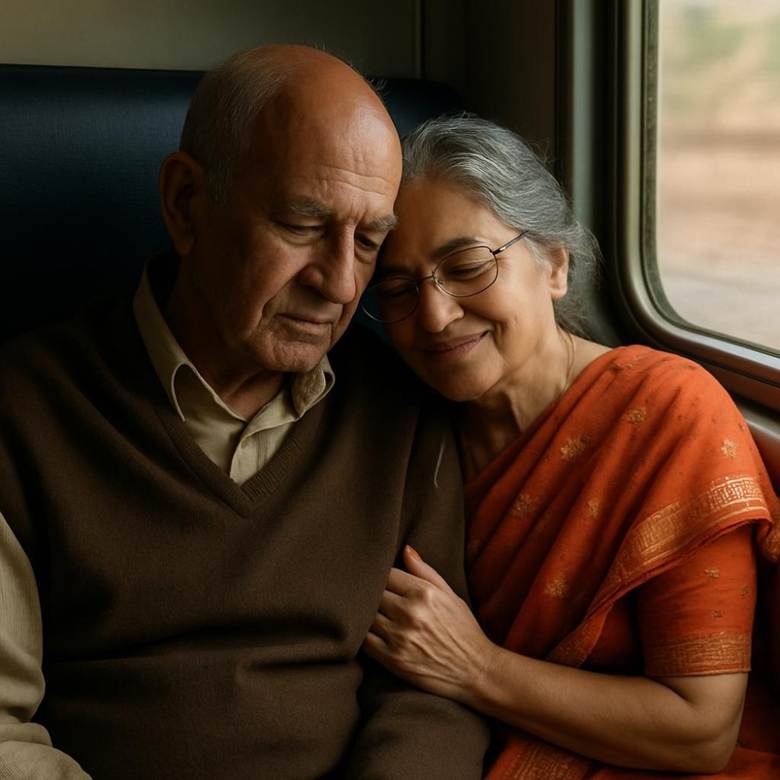
An elderly couple boarded the cabin in which I was.
Only one of them had a first-class ticket.
The wife explained that, due to a last-minute booking, she had a second-class ticket but was there to help her husband settle in.
When the ticket conductor came, he asked her to return to her compartment.
She politely asked for a few minutes to feed her husband.
Something in me shifted.
I offered to exchange places;
I took her second-class ticket so she could remain with him.
She was stunned. It wasn’t a short journey but an overnight one.
But to me, it wasn’t a sacrifice; it was a privilege.
Not a downgrade, but an upgrade.
Because the joy I saw in their eyes was far more valuable than a cushioned seat and a quiet ride.

What I didn’t know at the time was that I had just experienced what researchers call the “Helper’s High.”
Helping others releases dopamine, oxytocin, and serotonin — the brain’s natural feel-good chemicals.
Studies show it can reduce stress, improve mental health, and even extend life.
That moment on the train reminded me; the true highs don’t always come from promotions, praise or grand gestures.
Sometimes, it is simply the choice to stay calm when someone cuts you off in traffic.
To forgive quietly, because peace feels better than being right.
To hold a door open for someone or to simply offer a genuine compliment.
Have you experienced something like this? I’d love to hear your story
India_Club in Dubai stands as a haven for the Indian expatriate community, offering world-class facilities and a warm, welcoming space. Behind the scenes, its dedicated staff work tirelessly to make every guest’s experience seamless and comfortable.
But in their mission to serve others, who looks after their well-being?
Through the Rajyoga Center, I had the privilege of facilitating a series of well-being workshops for these incredible individuals, helping them reconnect with their inner strength, peace, and happiness.
Through meditative practices, mindfulness techniques, gentle physical exercises, and deep reflection, they experienced the power of self-care and the realization that true happiness comes from within. The energy in the room was transformational—what started as a session of relaxation turned into an awakening of self-worth and empowerment.
Seeing them leave recharged, inspired, and ready to serve with renewed joy was a moment of fulfillment.
Because when those who take care of others feel cared for, the ripple effect is profound.
A heartfelt thank you to the IndiaClub and the RajyogaCenter for making this experience possible!
Looking back at my session on the Sales Accelerator Program, SAP at AlSiraj
Some training sessions leave a lasting impression. both for the participants and the facilitator.
Looking back at my session on the Sales Accelerator Program, SAP at AlSiraj, I am reminded of the insightful discussions, the energy in the room, and the thoughtful handwritten feedback I received.
It is always rewarding to see how learning experiences resonate long after the session ends. The words shared by participants reinforced the importance of practical, engaging, and actionable learning; something I strive for in every session.
Grateful for the opportunity and for everyone who made it a success!
Have you ever looked back at a past learning experience that still inspires you today?
Would love to hear your thoughts!